
A raw food diet does make people lose weight. The harder question is where the loss stops, and that is where "easy" starts to look like the wrong word.
What 513 long-term raw food eaters reported
The clearest numbers come from a questionnaire study at Justus Liebig University of Giessen in Germany, published in 1999 (PubMed 10436305). It surveyed 216 men and 297 women who had kept to a raw food diet for an average of 3.7 years. The researchers split them into five groups by how much of their food was raw, from 70–79% at one end to 100% at the other.
Since starting the diet, the men reported an average loss of 9.9kg and the women 12kg. A quarter of the women and 14.7% of the men had a BMI below 18.5, which sits under the normal weight range. BMI was lower among people who ate more of their food raw, and among those who had stayed on the diet longer.
The authors put it plainly. Raw eating went with "a high loss of body weight", many of the eaters were underweight, and the authors concluded that a very strict raw food diet "cannot be recommended on a long-term basis".
Keep its limits in mind. It was a questionnaire taken at one point in time, not a trial that followed people forward, and the abstract does not say how quickly the weight came off.
Easy is not the same as steady
The NHS page of weight loss tips sets a pace instead of a target: aim to lose 0.5 to 1kg a week. At that rate, the 12kg the Giessen women reported would take somewhere between 12 and 24 weeks. Among its don'ts the same page lists "do not lose weight suddenly with diets" and "do not skip meals", warning that you might end up snacking more because you feel hungry.
The same page says to aim for your 5 A Day, with 80g of fresh, canned or frozen fruit or vegetables counting as one portion. The warning in the Giessen data sits at the far end, where BMI kept falling as the raw share of the diet went up.
Where dates fit on a raw menu
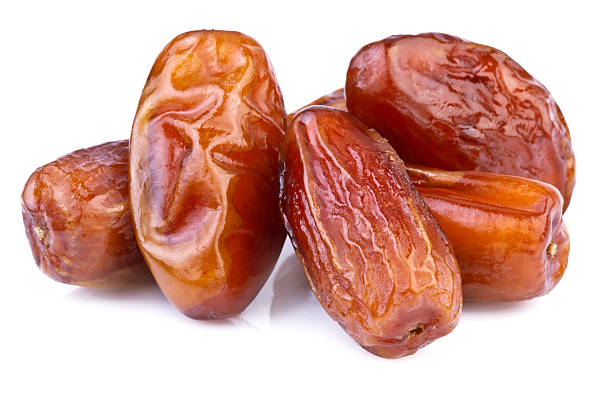
Dates are a different story. USDA FoodData Central lists Medjool dates at 277 kcal per 100g, and one pitted Medjool date weighs about 24g. That makes a single date roughly 66 kcal, with about 16g of sugars and 1.6g of fibre.
That density works in two directions. Ten Medjool dates come to about 665 kcal, which is a third of the 2,000kcal the NHS gives as the daily need of an average woman (2,500kcal for an average man). Eaten by the handful between meals, they add up quickly.
The NHS answer is a portion and a time of day. A 30g portion of dried fruit, and the NHS names dates in its list, counts as one of your 5 A Day, but it should be eaten at mealtimes and not as a snack between meals, to reduce the impact on teeth. For Medjool, 30g is a little over one date: about 83 kcal and 20g of sugars.
So a sensible raw plan might put a date or two into breakfast or alongside a fruit bowl at lunch, and leave the jar closed in the afternoon.

Buying dates for a raw kitchen
Dates Supplier Malaysia serves both retail and wholesale buyers and delivers across Malaysia, according to its about us page. For a quote, the contact page points you to WhatsApp. More articles on dates are collected on the Dates Supplier blog.
Readers of the older version of this post were sent to an outside page to find more information and that link stays here for anyone who used it.
This article is general information, not personal advice. If you are planning a big change to how you eat, talk to your GP or a dietitian first.