
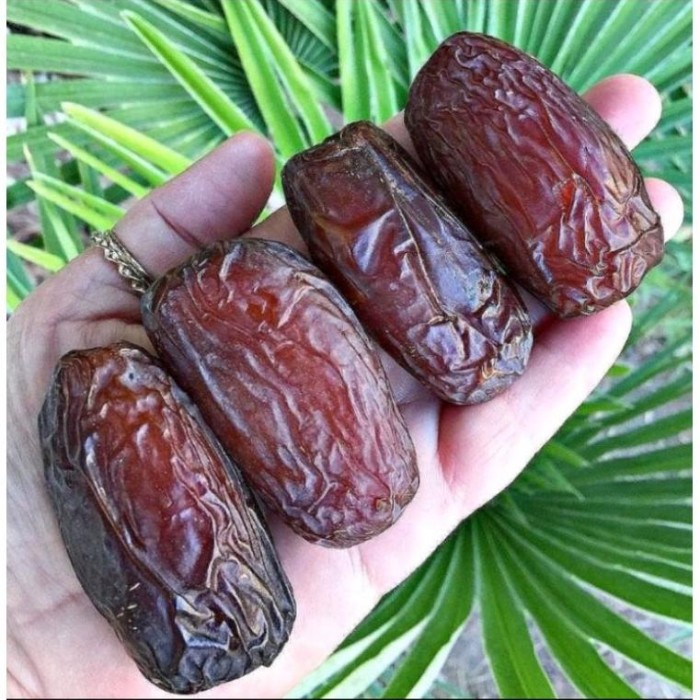
Medjool dates cost more than most other varieties, and buyers often ask why. The answer comes down to four things: origin, grade, size, and how the dates were handled after harvest. Understanding each one makes it easier to tell a fair price from an inflated one — or a genuinely cheap deal from dates that are cheap for a reason.
Origin changes the cost structure
Most kurma medjool palestine on the Malaysian market travels a long way before it reaches a shelf here — grown in the Jordan Valley, the West Bank, or increasingly in California and Morocco. Middle Eastern Medjool benefits from decades of growing expertise and established orchards, but freight, cold-chain shipping, and import duties add up over that distance. California-grown Medjool cuts out some of the international logistics for the US market, though it still has to cross the Pacific to reach Malaysia, so the saving doesn't always show up here. Moroccan Medjool tends to sit somewhere in between on price, partly because of shorter shipping lanes to some destinations.
Grade is the biggest single price driver
Suppliers grade Medjool by size and appearance — Jumbo, Super Jumbo, and Extra Fancy are common labels, though the exact naming varies by exporter. A carton of Jumbo Medjool with plump, unbroken fruit and minimal sugar crystallisation costs noticeably more per kg than a lower grade with smaller or slightly wrinkled dates. The taste difference between grades is usually small; the visual difference is not. If you're buying for gifting or hampers, grade matters. If you're buying to use in baking, cooking, or blending, a lower grade does the same job for less.
Count per kilogram tells you what you're actually paying for
Two boxes labelled "Medjool" can have a very different count per kg — some suppliers pack around 18-22 dates per kg for Jumbo grade, others closer to 26-30 for a smaller grade. When comparing prices between suppliers, check the count, not just the total weight. A lower price per kg with a much higher count per kg isn't necessarily a better deal.
Season and storage affect what's available
Medjool harvest runs roughly from September through November depending on the growing region, and demand spikes around Ramadan regardless of when the harvest happened. Dates bought close to Ramadan, when demand is highest, are more likely to have sat in cold storage for months — still good quality if the supplier stores properly, but worth asking about when the stock was packed if freshness matters to you.
What to ask a supplier before buying
Ask for the grade, the country of origin, and the count per kg — a supplier who can answer all three plainly usually has a properly run supply chain behind them. See our grading and pricing guide for how Malaysian suppliers typically structure their price tiers, or our guide to reading harga kurma listings if you're comparing several suppliers at once. You can also see how we source and grade our own stock on the About Us page.