
The title of this post says raw meals are the very best anti-aging skin care. No study cited below tested that claim. A narrower question can be checked. Which foods have been linked with fewer wrinkles in diet surveys, and what does cooking do to vitamin C, one of the nutrients those surveys flagged? The answers are below, with a short note on where dates sit. It is general reading, not medical advice.
What the wrinkle surveys measured
One analysis used the first US National Health and Nutrition Examination Survey (NHANES I). Cosgrove and colleagues looked at 4,025 women aged 40 to 74 (Am J Clin Nutr 2007, PMID 17921406). Their diet came from a single 24-hour recall, and dermatologists examined their skin. Higher vitamin C intake was associated with a lower likelihood of a wrinkled appearance (odds ratio 0.89) and of senile dryness (0.93). Higher linoleic acid intake went with less dryness and less skin atrophy. More fat and more carbohydrate went the other way. The lead author was based at Unilever's corporate research centre.
A Dutch team used photographs instead of a skin exam. Mekić and colleagues measured the area of the face taken up by wrinkles in 2,753 older people from the Rotterdam Study, then compared it with food questionnaires (J Am Acad Dermatol 2019, PMID 29601935). Closer adherence to the Dutch dietary guidelines was associated with fewer wrinkles in women, but not in men. Among the women, a fruit-dominant eating pattern went with fewer wrinkles and a red meat and snack pattern with more. The authors say the design was cross-sectional, so causation could not be proven.
Neither abstract separates raw food from cooked food. So "raw" is the part of the title these surveys cannot speak to.
What boiling does to vitamin C
The USDA FoodData Central tables (SR Legacy, 2019) let you compare the same vegetable raw and cooked. Raw broccoli lists 89.2 mg of vitamin C per 100 g. Boiled and drained broccoli lists 64.9 mg, roughly a quarter lower. Raw red sweet pepper lists 128 mg per 100 g.
Raw does not win on every count, though. The same two broccoli records give beta-carotene as 361 µg per 100 g raw and 929 µg boiled. On these two records, a mix of raw and cooked vegetables gets some of each.
UV tanning is on the NHS list
Food is only one part of what shows on skin. The NHS sunscreen and sun safety page lists premature skin ageing among the health risks linked to sunbeds and other UV tanning equipment. The same page says there is no safe or healthy way to get a tan, and that sunscreen should be reapplied every 2 hours. None of the diet surveys above replaces that advice.
Where dates fit
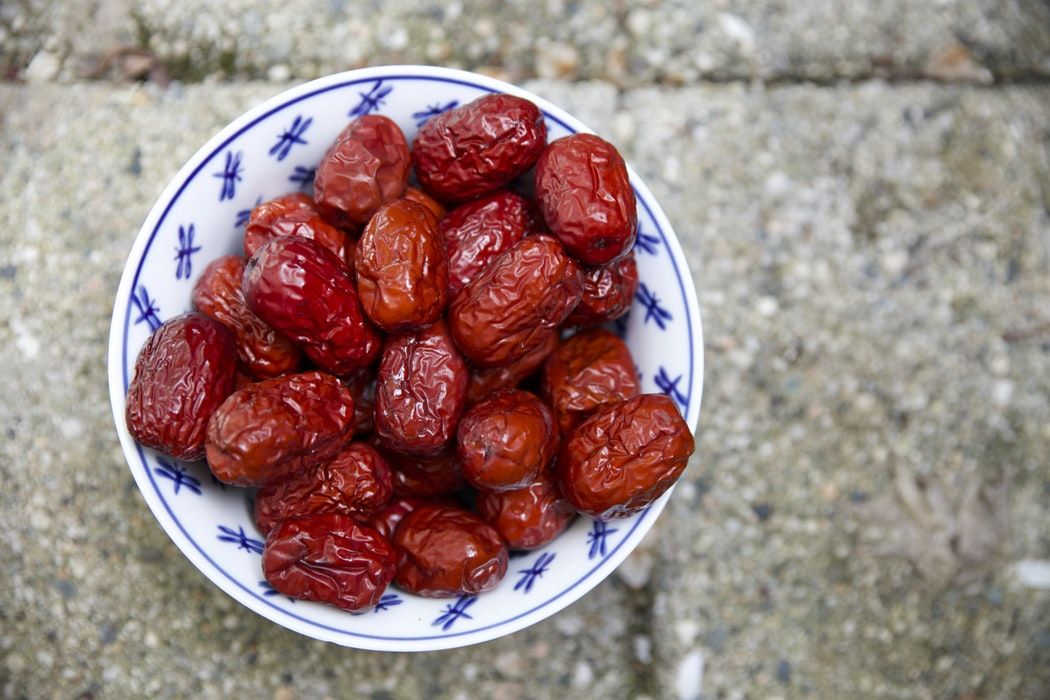
Medjool dates do not add to the vitamin C side. The FoodData Central record for Medjool dates lists 0.0 mg of vitamin C and 89 µg of beta-carotene per 100 g. They are dried fruit, and the NHS says a 30 g portion of dried fruit, such as dates, counts as 1 of your 5 A Day, eaten at mealtimes rather than as a snack between meals, to reduce the impact on teeth. Put a few Medjool dates next to a bowl of raw pepper and broccoli at lunch and the pepper is doing the vitamin C work.
If your interest in skin is about spots rather than lines, this site has a separate piece on acne and food studies.
Buying dates
The About page of Dates Supplier Malaysia describes retail and wholesale supply with delivery across Malaysia. The contact page gives WhatsApp +60 17-312 2220. Another Malaysian supplier site is Pembekal Kurma Selangor.