
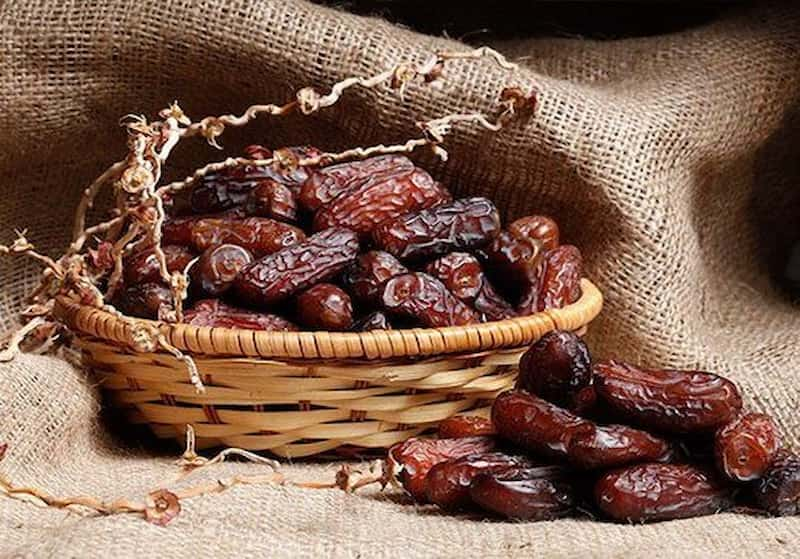
Harga kurma moves with the season and the exchange rate, but the growing side of the business is changing too. Date palms are still farmed the way they've been farmed for generations in most of the Middle East and North Africa — this post looks at where real technology has actually entered the picture, and where it hasn't, without dressing up ordinary farming as something futuristic.
Where sensors have actually made a difference
Soil-moisture sensors and weather stations are the most common tech upgrade on commercial date farms today, mostly in Saudi Arabia, the UAE, and parts of Iran. They feed into drip-irrigation controllers that adjust watering by zone instead of flooding the whole grove on a fixed schedule. That matters in date farming specifically because palms are deep-rooted and drought-tolerant — over-watering wastes far more water than under-watering costs in yield, so precision drip has a real payback in a desert climate.
Aerial and satellite imagery is used at scale by a handful of large operations to spot stressed sections of a plantation — patches that are yellowing or thinning — before it's visible from the ground. It's not universal. Most smaller and mid-size farms, which is still the majority of global date production, still rely on a farmer walking the rows.
Pollination is still mostly done by hand
Date palms are dioecious — male and female flowers grow on separate trees — and commercial groves pollinate by hand every spring, climbing each female tree and dusting the flower clusters with pollen collected from male trees. A few research groups have tested drone-assisted pollination to cut the labour and climbing risk, but it hasn't become standard practice; hand pollination still gives more reliable fruit set per bunch, and the labour cost is built into how the crop is priced.
Where technology stops and judgement takes over
Fruit is still hand-thinned and hand-harvested on almost every commercial farm, because a date bunch ripens unevenly and picking by machine damages the fruit. Grading — sorting for size, moisture, and skin condition into Jumbo, Grade A, Grade AA and so on — is done by trained sorters, sometimes with a calibrated scale and moisture meter to back up the eye, not by an automated line. That's part of why harga kurma varies so much between a graded, hand-sorted batch and a bulk ungraded one.
None of this makes date farming low-tech in a bad sense — it means the parts that benefit from sensors and irrigation control have adopted them, and the parts that need a trained hand still use one. A buyer paying attention to where their dates come from is really paying for that hand-sorting and hand-harvesting labour as much as for the fruit itself.
For a closer look at how that grading translates into price, see date prices and grading systems in Malaysia, and for a specific variety, the price of Medjool dates. If you're comparing suppliers, taste and texture differences across wholesalers is worth reading first.