
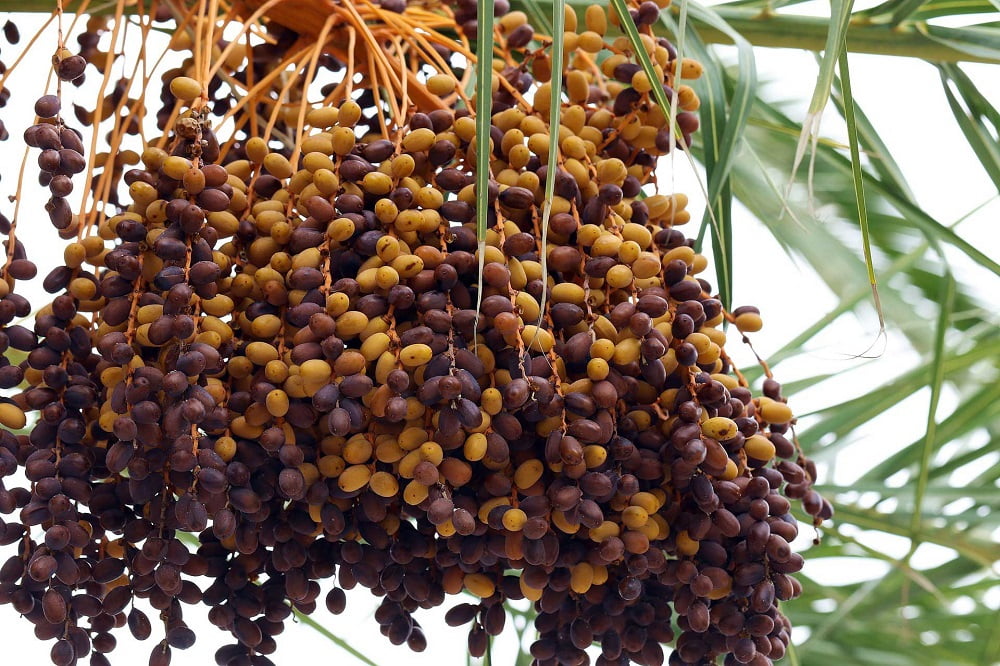
Malaysia barely grows dates commercially — the climate doesn't give the palm the long dry heat it needs to fruit at scale. So when a label says Kurma Malaysia, it almost always means dates imported from the Middle East or North Africa, repacked and sold for the Malaysian market, not fruit grown here. That distinction is the starting point for how these two categories actually get marketed.
Naming the origin does the work generic words can't
"Premium" and "authentic" on a box tell a buyer nothing. Naming the actual origin does: Ajwa comes from Madinah, Medjool mostly from Palestine and Jordan, Mariami and Piarom from Iran, Deglet Noor from Tunisia and Algeria. Sellers who print the country and the grade — Jumbo, AA, A — on the packaging are giving the buyer something to compare against a competitor's box. Sellers who skip straight to adjectives usually don't want that comparison made.
Grade and moisture matter more than the story on the box
A grade tells you size and uniformity; moisture content tells you texture. A Mariami will be softer and stickier than a Deglet Noor at the same grade, and that's a taste and use difference, not a marketing angle — it decides whether the date works better eaten plain or cooked into something. Any marketing that leans harder on packaging colour than on this kind of detail is selling the box, not the date.
Matching the date to a specific use sells better than a general pitch
The strongest pitch for a date variety is usually the narrowest one. Take Mariami: it's a poor fit for snacking whole for some buyers because of how soft and syrupy it gets, but it works well stirred into sauces or baked goods where that softness is an advantage. We cover exactly that in our piece on high-quality dates and where they earn their place beyond the fruit bowl. A supplier who can point a customer to the right variety for the right dish builds more trust than one repeating "high quality" on every product page.
Season and certification still carry real weight
Halal certification isn't optional in this market and buyers check for the logo before anything else on the label. Around Ramadan and Raya, packaging shifts toward gifting formats — boxed sets, smaller units for hampers — because that's when volume spikes, not because the dates themselves changed. Outside that window, the same stock sells in plain bulk packaging at a lower price point, which is a business decision more than a branding one.
If you're comparing suppliers rather than just packaging, our notes on finding a reliable dates wholesaler in Malaysia and on how kurma suppliers in Malaysia actually differ go through what to check before ordering, or you can contact us with specifics on grade and volume.