
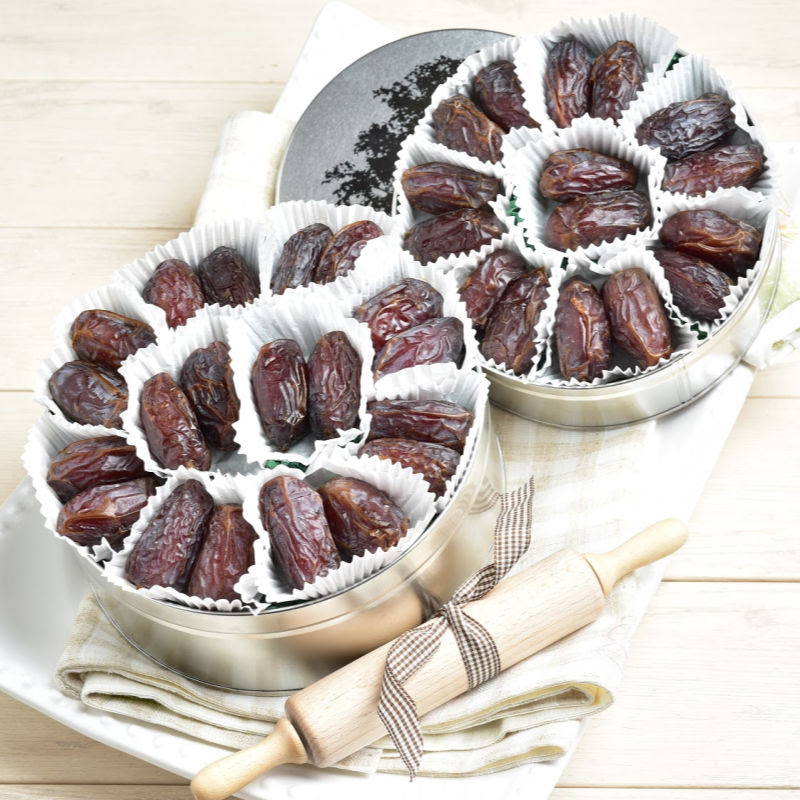
Medjool dates earned the "king of dates" name honestly — they're the biggest variety on the shelf, soft enough to pull apart with two fingers, and priced well above raisins or dried apricots for exactly that reason. The question worth asking isn't whether Medjool tastes good, it's whether it's the right pick for what you're actually buying dried fruit for: a snack tin, a hantaran box, or a recipe.
Size and texture, not a health claim
A single Medjool can weigh three to four times what a Deglet Noor or a raisin does — that's the whole reason for the "giant" reputation, not any nutritional edge. The flesh is soft enough that it's often eaten whole, skin and all, unlike firmer varieties that some buyers prefer to slice. If you're buying for snacking straight from the box, that softness is the actual selling point; if you're cooking or baking, a firmer date holds its shape better and doesn't turn to paste as fast.
Where it sits on price
Medjool runs noticeably above local dried-fruit staples like raisins and dried apricots per 100g, and above most other date varieties too, because of import cost and lower yield per palm. Current Medjool pricing is worth checking before you commit to a large box — grade and origin (Jordan vs Palestine vs California) move the price more than most buyers expect, and a lower grade at a Medjool price tag isn't a bargain.
How it stacks up against the usual alternatives
Raisins cost less and last longer in the pantry but don't have the same size or bite. Dried apricots bring a tartness Medjool doesn't have, and cranberries are the sharpest of the three — useful if you want contrast in a mixed dried-fruit tray rather than one dominant flavour. None of these substitute for Medjool in a recipe that specifically calls for a soft, pliable date (stuffed dates, energy balls); for those, buy dates rather than a firmer variety and hope it works.
What to actually check before buying
Look at the skin: Medjool should look slightly wrinkled but not dry or crusted, and the flesh should give under light pressure without feeling wet or fermented. Origin affects texture more than most buyers realise — Palestinian Medjool tends to run softer and darker than the Californian crop. If you're buying in bulk for a household or for gifting, ask which grade you're getting; the grading terms aren't standardised across sellers, so a "premium" label from one supplier isn't automatically the same fruit as another's, and it's worth comparing against a proper date grading and pricing guide before you pay a premium price for an ungraded box.