
Beyond Medjool: dates worth knowing about
Most first-time buyers in Malaysia stop at Medjool and Deglet Noor because those are the two names every supermarket stocks. That's a small slice of what's out there. Once you start looking at dates beyond the mainstream shelf, the differences in texture and sweetness are bigger than most people expect — and worth knowing if you're buying for a hamper, a wholesale order, or just want to stop buying the same variety out of habit.
Khalas
Grown mainly in Saudi Arabia and the UAE, Khalas is a medium-sized, golden-brown date with a soft, slightly chewy bite and a sweetness that isn't as heavy as Medjool's — there's a light citrus note underneath it that people either love or don't notice at all. In the Gulf it's often treated as an everyday eating date rather than a gift-box variety, which keeps the price more reasonable per kilo than the showier names.
Sukkari
Sukkari comes out of Saudi Arabia's Qassim region and the name is literally "sugary" — it's one of the sweetest dates grown commercially. The colour runs light amber, and the texture sits somewhere between soft and slightly firm depending on how long it's dried. It doesn't travel or store quite as well as Medjool, so if you're buying Sukkari expect a shorter shelf window and check the packing date before committing to a large order.
Hayani (Hayyani)
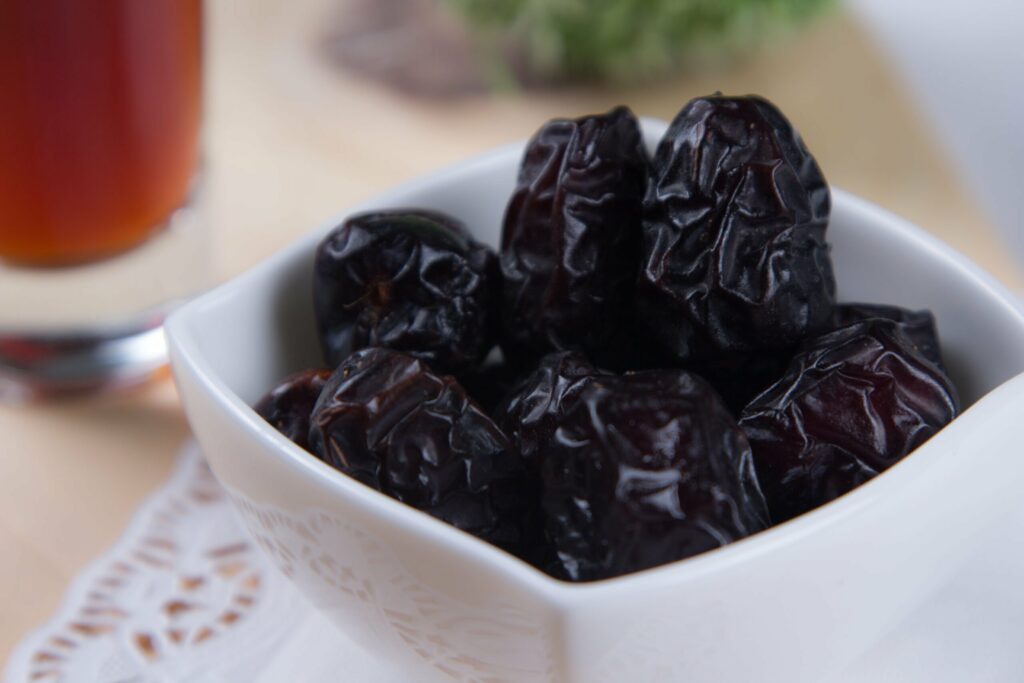
Hayani is grown widely in Egypt and is unusual among common varieties for how dark it gets — deep brown to almost black — with a flavour people describe as closer to prune or molasses than the caramel notes typical of Medjool. It's also commonly eaten and sold at the semi-ripe (rotab) stage rather than fully dried, which is worth asking about if you want the fully-dried, longer-shelf-life version instead.
Where Medjool actually comes from
The variety most Malaysians already know, Kurma Majol, traces back to Morocco, though the bulk of what's sold commercially today is grown in Jordan, Israel/Palestine, and increasingly California. Size, colour depth and caramel sweetness are what buyers use to judge quality — our breakdown of Palestinian Medjool taste and texture goes through what separates a good batch from an average one.
Why it's worth trying something other than the usual two
Buying a variety you haven't tried isn't just novelty. Smaller-volume varieties like Khalas and Sukkari usually come from smaller farms and cooperatives rather than the large commercial operations behind Medjool and Deglet Noor, so exploring them also means supporting a wider range of growers rather than concentrating demand on the two or three varieties that dominate supermarket shelves. If you're weighing local versus imported options generally, our comparison of Malaysian and imported kurma covers that trade-off in more detail.
What to check before buying an unfamiliar variety
Ask for the harvest year and origin, not just the variety name — a Khalas or Sukkari that's been sitting in storage for over a year will have dried out and lost the texture that makes it worth choosing over Medjool in the first place. If you can, ask for a small sample before a bulk order; the difference between a fresh batch and an old one is obvious the moment you taste it, and no description on a supplier's page substitutes for that.