
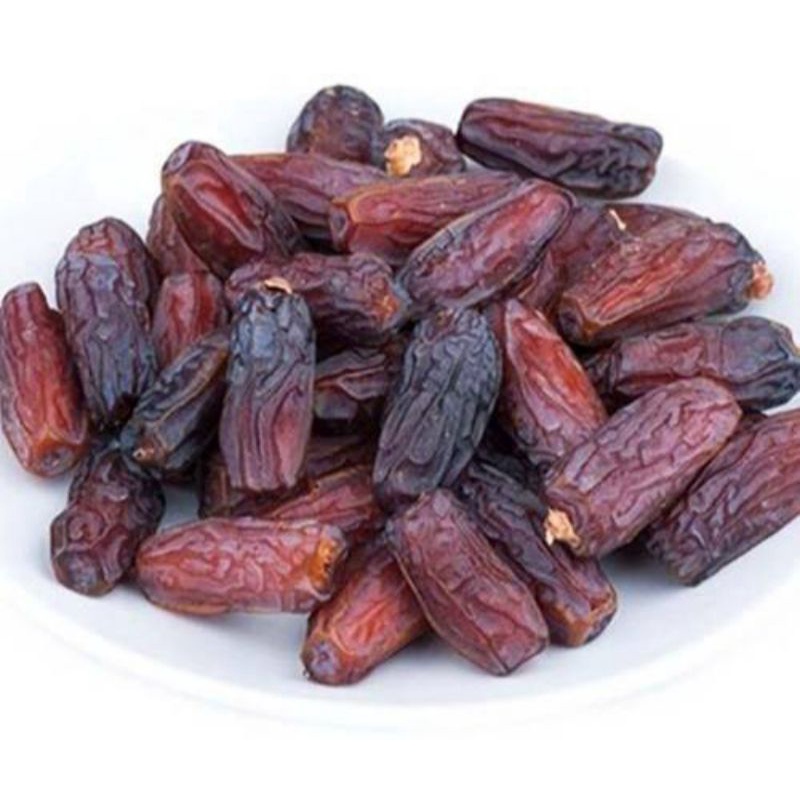
Buah kurma sold in Malaysia almost never comes straight off the palm — the trees don't grow here, so everything arrives by air or sea from the Middle East, Iran, or North Africa. What most shops label "fresh" is really a less-dried stage of the same fruit, not a tree-ripe date picked yesterday. Knowing that difference — and how it fits into the wider marketing of Malaysian and Middle Eastern dates — changes what you should actually be buying.
What "Fresh" Actually Means for Imported Dates
A date goes through several ripening stages on the palm — khalal (hard, yellow or red), rutab (soft, partly brown, still moist), and tamr (fully dried, the stage most people picture when they hear "dates"). What Malaysian sellers call fresh kurma is usually rutab-stage fruit, shipped chilled to slow further drying. It still needs refrigeration on arrival, which is why you'll see it kept cold in the shop rather than sitting in an open bin at room temperature.
True tamr-stage dates — Ajwa, most Safawi, most Sukkari — are dried enough to sit at room temperature for months. If a stall is selling a variety at room temperature and calling it "fresh," that claim is worth a second look; ask when it arrived and how it's been stored.
Telling Them Apart Before You Buy
A few checks matter more than the label on the box:
- Skin texture: rutab-stage dates have a smoother, sometimes slightly wet-looking skin. Tamr-stage dates are visibly wrinkled — that's normal, not a sign of age.
- Give and firmness: press gently. Rutab gives easily and feels soft through to the centre. Tamr resists more and has a denser bite.
- Sugar on the surface: a light white bloom on tamr-stage dates is crystallised natural sugar, not mould — it rubs off. A sticky, dark, fermenting smell on any date, fresh or dried, means it's past its window.
- Storage at point of sale: if it's meant to be a moist, less-dried date, it should be chilled. Room-temperature "fresh" dates in warm Malaysian weather won't hold that texture for long.
Where Each One Actually Wins
For raya hampers and gift boxes, the fuller, glossier look of a well-kept rutab-stage date like Mariami or a good Safawi photographs and presents better than a wrinkled tamr date, and it's usually what buyers picture when they say "kurma segar."
For everyday snacking and for anything you're stocking without daily fridge turnover, tamr-stage dates make more sense — they hold for months at room temperature, which matters for a household or a small shop that isn't reordering weekly.
For cooking and baking — date paste, stuffing, smoothies — the concentrated sugar and firmer flesh of tamr-stage dates blend and cook more predictably than the wetter rutab stage, which can throw off a recipe's liquid balance.
What This Means When You're Buying in Bulk
If you're buying wholesale rather than a small retail pack, the fresh-versus-dried question turns into a cold-chain question. Rutab-stage stock needs continuous refrigeration from the supplier's warehouse to your storage — a single break in that chain shortens its shelf life fast. Tamr-stage stock is far more forgiving of a delivery delay or a warm loading dock. Ask any supplier about their grading and pricing by moisture level, since rutab-stage dates typically carry a premium over the equivalent tamr-stage grade, precisely because of the extra handling.
It's also worth understanding how taste and texture vary by variety before committing to a bulk order, since "fresh vs dried" is only one axis — variety changes the picture just as much. And whichever stage you're buying, check the supplier's storage and food-safety practices — that matters more for the moister, fresher stage than it does for a fully dried date.
Key Highlights:
- "Fresh" Malaysian kurma is almost always rutab-stage (soft, partly dried) fruit shipped chilled — not a tree-ripe date, since none are grown locally.
- Check skin texture, firmness, and storage temperature at point of sale rather than trusting the label alone.
- Rutab-stage dates suit gifting and hampers; tamr-stage (fully dried) suits everyday stock and baking, since it holds at room temperature.
- Buying rutab-stage dates in bulk means asking suppliers about their cold-chain handling, not just their price per kilogram.