
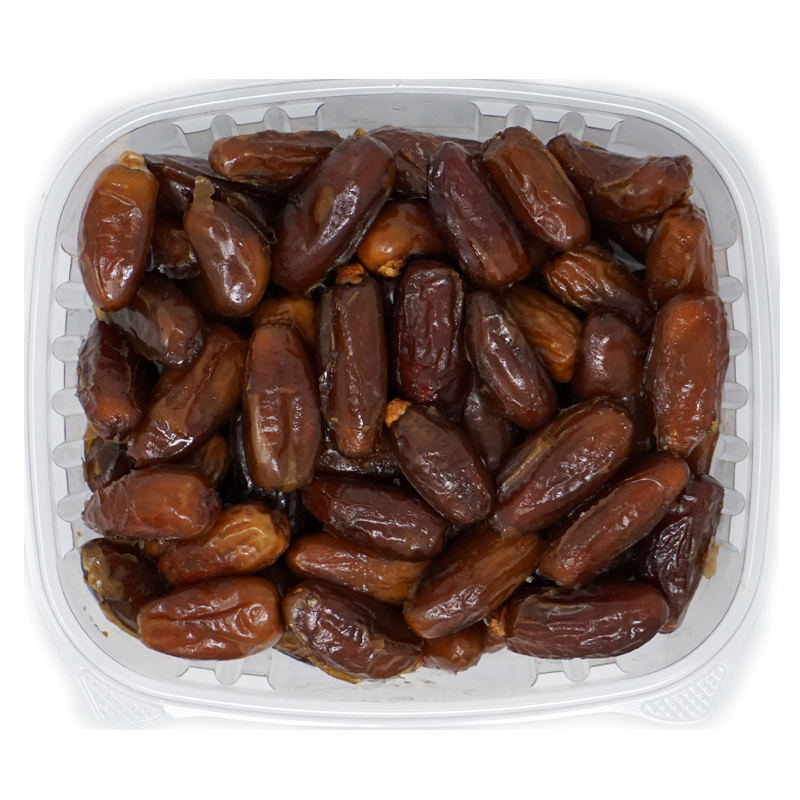
In Malaysia, "kurma tangkai" almost always means Deglet Noor dates still attached to the strands they grew on, packed so the cluster arrives in one piece. Most of it comes from Tunisia, with some from Algeria. Deglet Noor is a semi-dry date. It is light amber, a little translucent against the light, with a firmer bite and a honey-like sweetness that is less sticky than Medjool or Ajwa. If you have bought a box of Kurma Tangkai for Ramadan, this is very likely what was inside.
Between the packing house in North Africa and the shelf of your local kedai runcit, a distributor does most of the unglamorous work. Here is what that work looks like for this one product.
Buying ahead of a Ramadan that keeps moving
Tunisia harvests Deglet Noor from roughly October to December. Ramadan, when Malaysian demand for kurma tangkai peaks, follows the lunar calendar and starts about 11 days earlier every year. In 2027 it begins in early February. The boxes that sell that month have to be harvested, packed, shipped and cleared through customs well before then, so a distributor commits to volume months ahead, when nobody knows exactly how fast it will sell.
Get that guess wrong and there are two bad outcomes. Too little stock means empty shelves in the busiest weeks of the year. Too much means boxes carried into the quiet months after Hari Raya. Our post on the Ramadan rush for kurma tangkai looks at the buyer's side of that same season.
Breaking bulk for smaller sellers
Importers think in containers. A pasar malam trader, a mosque committee ordering for iftar or a company putting together staff hampers needs anything from a few cartons to a few hundred boxes. The distributor sits in between. It buys in bulk, stores the stock and sells it on in quantities each customer can actually use, often with delivery split across the month. That middle step is also where most of the wholesale price gets set, and our guide to wholesale dates prices in Malaysia explains what goes into it.
Keeping the strands in one piece
People buy kurma tangkai for the look of the cluster. A box where half the dates have dropped off the strands and are rolling loose at the bottom is a hard sell as a gift, even if the fruit tastes the same. So handling matters: cartons stacked so the bottom layer isn't crushed, boxes not thrown about in the lorry, and damaged packs pulled out before they reach the retailer. None of it is complicated. It just has to happen every time.
Storage is easier than with soft dates. Semi-dry Deglet Noor copes with room temperature much better than a moist variety, so a cool, dry storeroom out of direct sun is enough for unopened boxes. At home, once the box is open, an airtight container stops the fruit drying out further.
Labels and halal paperwork
Imported food sold in Malaysia needs a label in Bahasa Malaysia that names the local importer or distributor. Buyers also look for a halal logo, and on imported dates that means certification from a foreign body that JAKIM recognises. A distributor who gets this right once saves every shop further down the line from checking it carton by carton.
Questions to ask before you order
If you are buying kurma tangkai to resell, a handful of questions sorts out the serious suppliers quickly:
- Which country is it from, and which harvest?
- Is the net weight on the box with or without the strands?
- How many boxes come in a carton, and what is the minimum order?
- What happens if a carton arrives crushed, or most of the dates have come off the strands?
- Can you hold my stock and deliver it in parts through Ramadan?
A supplier who answers these plainly is usually easier to work with than one who only sends a price list. For a longer checklist, see how to choose between dates suppliers. Our piece on festive-season demand for dates is useful for planning beyond Ramadan, and if your order mixes in softer varieties, Pembekal Kurma has a guide to judging value when buying high-quality dates such as Medjool.