
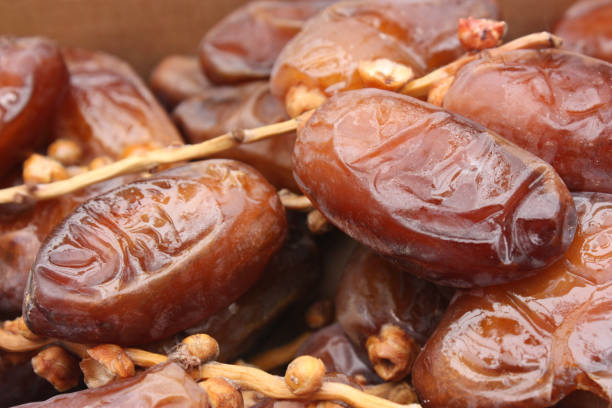
Kurma tangkai — dates left on the strand instead of stripped and boxed loose — is the format most Malaysian buyers reach for once, usually as a Ramadan gift, and then either love or ignore for the rest of the year. The strand isn't just presentation. It changes how the fruit keeps, how you judge freshness at the point of sale, and how much you actually pay for the same weight of dates.
Why the strand costs more per kilo
A box of loose kurma tangkai carries a mix of fully ripe and slightly under-ripe fruit, plus the woody strand itself, which adds weight you don't eat. That's the trade-off: you're paying a premium — usually 20 to 40% over loose dates of the same grade — for a product that keeps its moisture better and looks better on a table. If the goal is value for everyday eating, loose dates from the same variety are the better buy; if the goal is a gift or a festive spread, the strand earns its price.
Judging freshness before you buy
The strand actually makes quality easier to check than a sealed box of loose fruit does:
Colour consistency along the strand
Dates on the same strand should be roughly the same shade. A strand with several pale or two-tone dates mixed among darker ones was likely picked before full ripeness and won't sweeten further once cut.
The stem itself
A fresh strand is still slightly flexible and a pale tan colour. A stem that's gone dark brown and brittle has been sitting in storage for a while — the dates may still be fine, but it's a sign to check the sell-by date rather than assume freshness.
Skin tightness
Press a date gently near the stem end. Skin that's taut with no wrinkling suggests good moisture retention; heavy wrinkling across most of the strand usually means the batch has dried out past its ideal eating window, even if it's not spoiled.
Storing a strand instead of a box
Loose dates go straight into an airtight container. A strand doesn't fit that logic as neatly — cramming it in bends and damages the fruit. Wrap the whole strand loosely in a paper towel, then in a plastic bag with the air pressed out, and keep it in the fridge door rather than the back of the shelf, where temperature swings are smaller. Handled this way a strand holds its texture for two to three weeks; left on the counter in Malaysian room temperature, closer to five days before the skin starts to soften unevenly.
Serving it whole vs. breaking it down
Keeping the strand intact for the table works for a single sitting or a short gathering, but once a strand has been handled by several people over an evening, the exposed fruit dries out faster than dates that were removed and stored properly. For anything beyond same-day serving, snap off only what will be eaten and rewrap the rest — it keeps noticeably better than a full strand left out.
Where tangkai fits outside Ramadan
Demand for the strand format spikes hard in the weeks before Ramadan and drops sharply after, which is really a gifting pattern rather than a reflection of the fruit's quality. The same dates, sold loose the rest of the year, are identical in taste — Medjool and other premium grades in particular are worth buying loose outside the festive season, when the strand premium disappears. For more on how ripeness and drying affect texture generally, see our fresh vs. dried comparison, and for sourcing beyond a single Ramadan purchase, our note on how distributors handle tangkai stock covers the supply side. If you're comparing local and imported options generally, this overview is a useful starting point.