
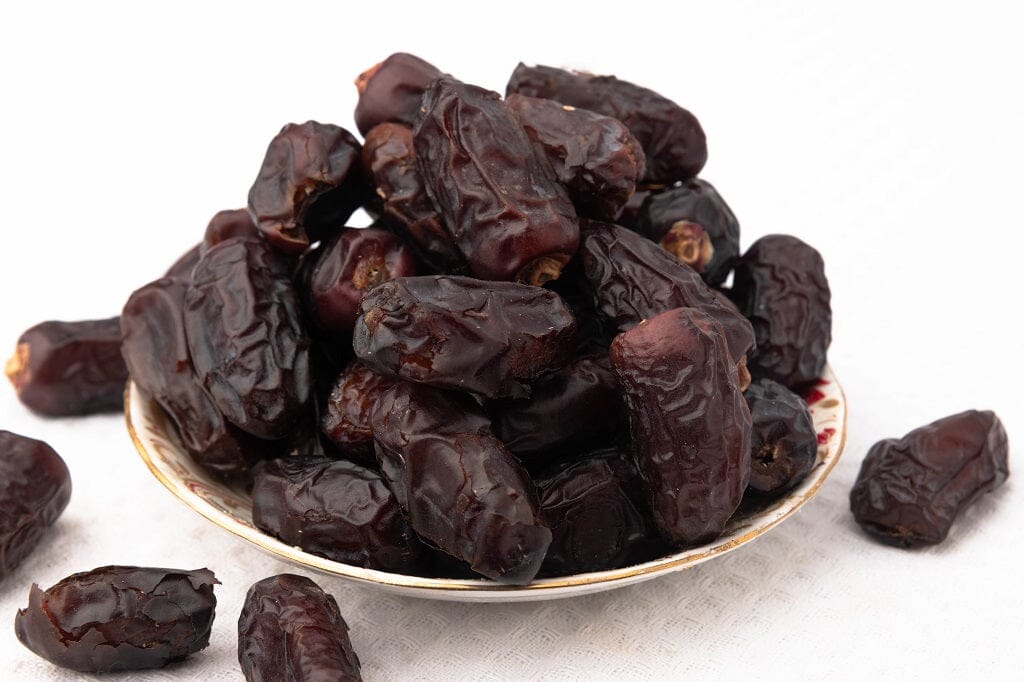
Date paste can replace refined sugar in most home baking, but not at a straight one-to-one swap — get the ratio wrong and the batter turns dense and gummy instead of sweet. Understanding harga kurma matters here too, since the variety you cook with changes both the cost and the result: cheaper Deglet Noor works fine blended into paste, while Medjool's softer texture is better reserved for recipes where whole or halved dates matter.
Making date paste that actually works in a recipe
Soak pitted dates in warm water for about 15 minutes, then blend with a little of that soaking water until smooth — the paste should be spreadable, not runny. For most recipes, swap sugar for date paste at roughly three-quarters the amount: 200g sugar becomes about 150g paste, then adjust other liquids down slightly since the paste carries moisture the sugar didn't.
Where the swap works well, and where it doesn't
Date paste holds up in cakes, muffins, energy bars and sauces where a slightly denser, moister crumb isn't a problem — it often improves them. It struggles in recipes that depend on sugar for structure rather than sweetness: meringues, brittle, or anything needing sugar to caramelise and set hard. For those, dates are the wrong tool regardless of variety.
Savoury dishes don't need the paste at all
Whole or chopped dates work better than paste in tagines, stuffed appetisers, or stirred into a stew near the end of cooking — the point there is texture and bursts of sweetness against something salty, not a uniform sweetening. Stuffing a date with a sliver of cheese or nuts before serving needs a firmer variety that holds its shape; a very soft Medjool falls apart.
Matching texture to method, not just taste
Softer dates purée easily and disappear into a batter, which is what you want for baking. Firmer dates keep their shape when chopped, which is what you want stirred into a salad or scattered over rice. Buying based on price alone, without checking which texture the recipe actually needs, is the most common reason a home cook ends up with the wrong bag of dates for the job — the fresh-versus-dried distinction alone changes how a date behaves once it hits the blender or the pan.
Buying for a specific recipe versus buying to snack on
If dates are going into a paste anyway, the visual grade matters less — broken or uneven-looking dates work fine once blended, and cost less. Save the higher grades, and the higher price that comes with them, for dishes where the date is served whole and visible. Buying the expensive box for a recipe that's about to blend it into paste is money spent on something nobody will see.
Starting simple
Date paste in a batch of cookies or a smoothie is the easiest place to start; stuffed dates and sauces are worth trying once the paste ratio feels familiar. The variety matters less than getting the water-to-date ratio right the first few times.